
⚠
Strictly for Research Purposes Only
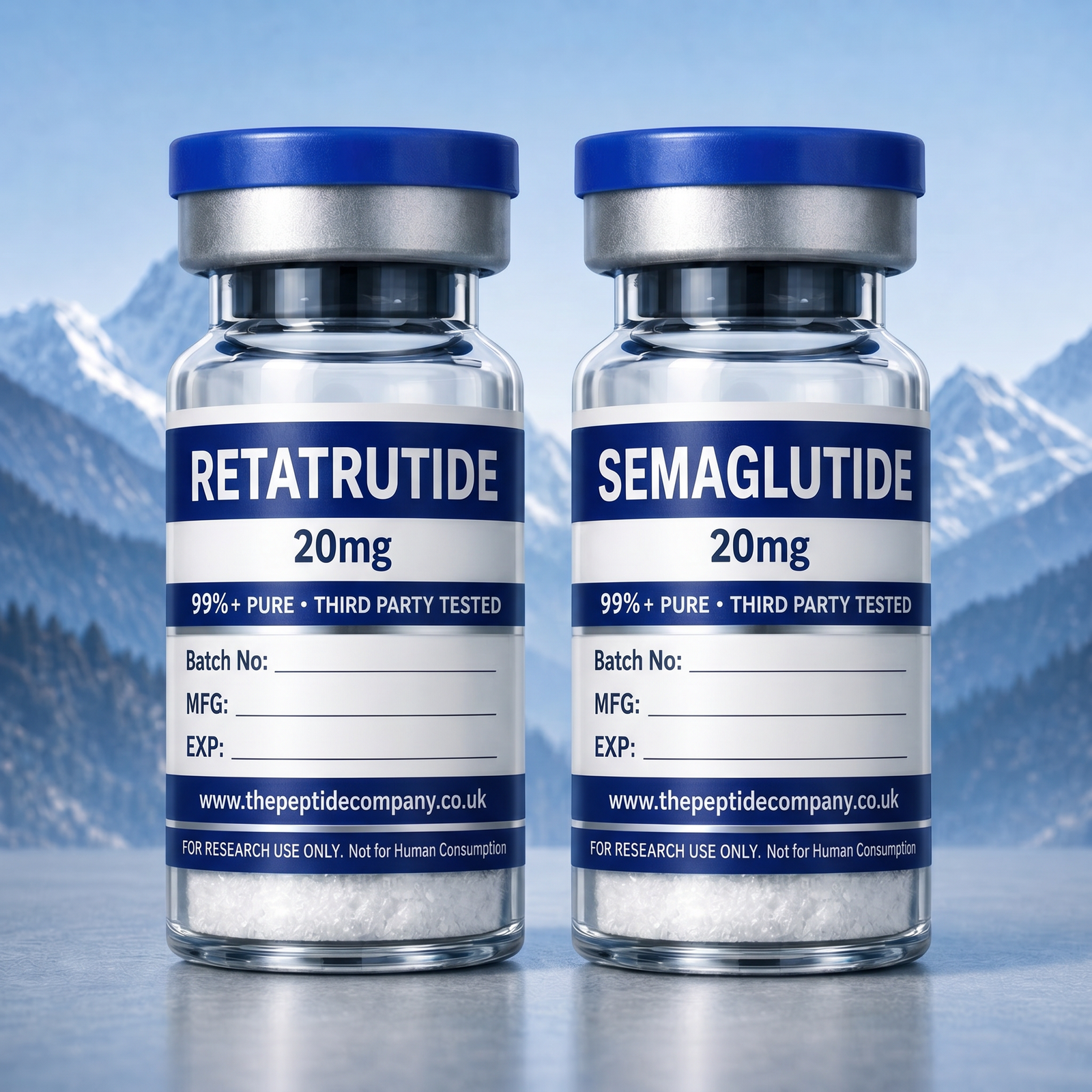
This product: GLP Transformation Stack is not intended for human consumption, diagnostic, or therapeutic use. It has not been evaluated or approved by the FDA. Misuse is strictly prohibited and may result in legal consequences.
Retatrutide Purity
≥99%
Semaglutide Purity
≥99%
Form
Lyophilized Powder
Storage
-20°C
🔬 Technical Specifications
Retatrutide (20mg)
Molecular Formula
C221H342N46O68
Molecular Weight
~4731.4 g/mol
AMOUNT PER VIAL
20mg per vial
Packaging
Sterile 2ml vials
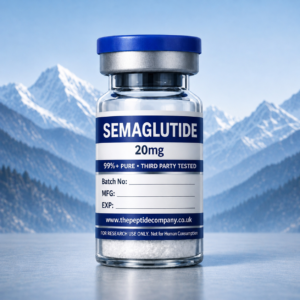
Semaglutide (20mg)
Molecular Formula
C187H291N45O59
Molecular Weight
~4113.6 g/mol
AMOUNT PER VIAL
20mg per vial
Packaging
Sterile 2ml vials
Shipping & Handling
✓ Shipped in temperature-controlled packaging
✓ Same-day dispatch for orders before 2PM
✓ Discrete, plain packaging
🧪 Research Stack Overview
The GLP Transformation Stack combines two of the most widely discussed metabolic research peptides currently being investigated within obesity, glucose regulation, and weight management research.
This stack includes: Retatrutide (20mg) and Semaglutide (20mg).
Researchers are particularly interested in these compounds due to their interactions with incretin signalling pathways that influence appetite regulation, glucose metabolism, energy expenditure, and body composition. The combination allows researchers to compare and investigate different receptor activation profiles within a single research protocol.
Scientific Background
Retatrutide: Retatrutide is an investigational triple receptor agonist that targets GLP-1 receptors, GIP receptors, and Glucagon receptors. This triple-agonist mechanism differentiates Retatrutide from previous generations of metabolic research compounds and has generated considerable scientific interest in obesity and metabolic research.
Semaglutide: Semaglutide is a GLP-1 receptor agonist that has become one of the most extensively studied compounds in obesity and glucose metabolism research. Research has demonstrated significant effects on appetite regulation, satiety signalling, and body weight reduction, making it an important benchmark compound within metabolic studies.
Research Applications
Researchers commonly investigate:
- Appetite regulation pathways
- Body composition changes
- Glucose metabolism
- Energy expenditure
- Metabolic health
- Incretin biology
- Weight management mechanisms
- Hormonal signalling pathways
Scientific Studies: Efficacy & Safety
- 1. Phase 2 Retatrutide Obesity Trial (NEJM, 2023)
Authors: Jastreboff AM, Kaplan LM, Frias JP, et al.
- Design: 48-week, randomized, double-blind, placebo-controlled study involving 338 adults with obesity or overweight.
- Key Findings: Up to 24.2% mean body weight reduction at 48 weeks. Significant improvements in metabolic markers, blood pressure, lipids and glucose parameters. Most adverse events were mild-to-moderate gastrointestinal symptoms.
- DOI: 10.1056/NEJMoa2301972
Source: New England Journal of Medicine. - 2. STEP 1 Semaglutide Trial (NEJM, 2021)
Authors: Wilding JPH, Batterham RL, Calanna S, et al.
- Design: 68-week, double-blind, placebo-controlled trial involving 1,961 adults with overweight or obesity.
- Key Findings: Mean body weight reduction of 14.9%. 86.4% of participants achieved at least 5% weight reduction. Significant improvements in cardiometabolic risk factors. Gastrointestinal symptoms were generally mild to moderate.
- DOI: 10.1056/NEJMoa2032183
Source: New England Journal of Medicine.
Explore Related Research Compounds
Reviews
There are no reviews yet.