🧪 Research Applications of Tesamorelin
Scientific Interest in Tesamorelin Research
Tesamorelin is a synthetic analogue of Growth Hormone Releasing Hormone (GHRH) that has become an important subject of scientific investigation. Researchers continue exploring its interaction with growth hormone pathways and the broader physiological systems influenced by endocrine signalling.
Growth Hormone Research
One of the primary areas of investigation involves endogenous growth hormone release. Researchers study how Tesamorelin interacts with GHRH receptors and influences natural hormone signalling pathways.
Metabolic Research
Scientists continue exploring how growth hormone-related pathways may contribute to metabolic regulation and energy utilisation. Areas of interest include:
- Energy metabolism
- Nutrient utilisation
- Hormonal regulation
- Metabolic adaptation
- Cellular signalling
Body Composition Studies
Researchers frequently investigate relationships between growth hormone signalling and body composition-related biological processes.
Endocrine System Research
Tesamorelin remains an important tool for studying interactions within the endocrine system and understanding hormone communication pathways.
Healthy Ageing Investigations
Because growth hormone production naturally changes over time, researchers continue investigating compounds such as Tesamorelin within healthy ageing and longevity-related studies.
As scientific understanding develops, Tesamorelin remains one of the most studied peptides within growth hormone releasing hormone research.
🔬 Understanding How Tesamorelin Works
Growth Hormone Releasing Hormone Research
Tesamorelin is classified as a Growth Hormone Releasing Hormone analogue. Rather than acting as growth hormone itself, researchers investigate how Tesamorelin may stimulate the body’s natural production pathways.
GHRH Receptor Activity
Tesamorelin is studied because of its interaction with receptors involved in growth hormone regulation. Researchers continue examining how this interaction may influence:
- Growth hormone release
- Cellular communication
- Metabolic pathways
- Recovery processes
- Hormonal signalling networks
Endogenous Hormone Production
Scientific investigations frequently focus on understanding how natural hormone production can be regulated through biological signalling mechanisms.
This remains one of the key areas driving ongoing Tesamorelin research.
📊 Why Researchers Study Tesamorelin
Significant Scientific Interest
Tesamorelin has attracted attention because it provides researchers with a tool for investigating growth hormone regulation through natural physiological pathways.
Hormonal Signalling Research
Researchers continue studying how hormones communicate throughout the body and coordinate complex biological processes. Tesamorelin investigations frequently contribute to a better understanding of these signalling systems.
Growth Hormone Axis Studies
The growth hormone axis involves multiple interconnected pathways. Scientists explore how GHRH analogues such as Tesamorelin interact with:
- Growth hormone release
- Hormonal feedback mechanisms
- Metabolic regulation
- Cellular adaptation processes
Long-Term Biological Regulation
Researchers continue examining how growth hormone-related signalling pathways influence broader physiological systems over time.
These investigations have helped establish Tesamorelin as an important compound within endocrine research.
⚖️ Tesamorelin vs Other Growth Hormone Research Peptides
Understanding Research Differences
Researchers often compare Tesamorelin with other peptides involved in growth hormone investigations.
- Tesamorelin vs Ipamorelin: Tesamorelin primarily targets Growth Hormone Releasing Hormone pathways. Ipamorelin is studied for its activity at growth hormone secretagogue receptors. Because these mechanisms differ, researchers frequently compare their effects within laboratory models.
- Tesamorelin vs CJC-1295: Both compounds are investigated for their relationship with growth hormone release, although their structures and pharmacological characteristics differ.
- Tesamorelin vs NAD+: NAD+ research focuses on cellular energy production and mitochondrial function. Tesamorelin research focuses on endocrine signalling and growth hormone pathways.
- Tesamorelin vs GHK-Cu: GHK-Cu is commonly studied for regenerative biology and cellular maintenance, whereas Tesamorelin research centres around hormone regulation.
Understanding these distinctions helps researchers select appropriate compounds for specific study objectives.
🧬 Scientific Background of Growth Hormone Releasing Hormone
Understanding GHRH Biology
Growth Hormone Releasing Hormone is a naturally occurring signalling molecule responsible for stimulating growth hormone production within the body. Researchers continue studying GHRH because of its role in regulating:
- Growth hormone secretion
- Metabolic activity
- Cellular adaptation
- Recovery processes
- Hormonal communication
Growth Hormone Signalling Networks
Scientific investigations frequently explore how GHRH interacts with other biological pathways to coordinate physiological responses. These studies help improve understanding of endocrine regulation and hormonal balance.
Research Importance
Because growth hormone influences multiple biological systems, compounds that affect GHRH pathways remain highly relevant within modern peptide research.
❄️ Storage and Handling Information
Maintaining peptide integrity is essential for reliable laboratory investigations.
Lyophilised Powder Storage
Prior to reconstitution, Tesamorelin should generally be stored frozen at approximately -20°C.
Reconstituted Material
Following reconstitution, researchers typically refrigerate solutions and utilise them within suitable laboratory timeframes.
Environmental Protection
To preserve quality, materials should be protected from:
- Direct sunlight
- Excessive heat
- Moisture exposure
- Contamination risks
Avoid Repeated Freeze-Thaw Cycles
Repeated freeze-thaw cycles may affect peptide stability and should generally be minimised.
Laboratory Best Practices
Researchers should:
- Use sterile handling procedures
- Wear appropriate PPE
- Maintain accurate records
- Follow institutional protocols
- Store materials correctly between uses
❓ Frequently Asked Questions
What is Tesamorelin?Tesamorelin is a synthetic analogue of Growth Hormone Releasing Hormone (GHRH) used in laboratory and scientific research.
What type of peptide is Tesamorelin?It is classified as a Growth Hormone Releasing Hormone analogue.
Why do researchers study Tesamorelin?Scientists investigate its relationship with growth hormone release and endocrine signalling pathways.
What is GHRH?GHRH stands for Growth Hormone Releasing Hormone, a naturally occurring hormone involved in regulating growth hormone production.
Is this product intended for human consumption?No. This product is supplied strictly for laboratory and research purposes only.
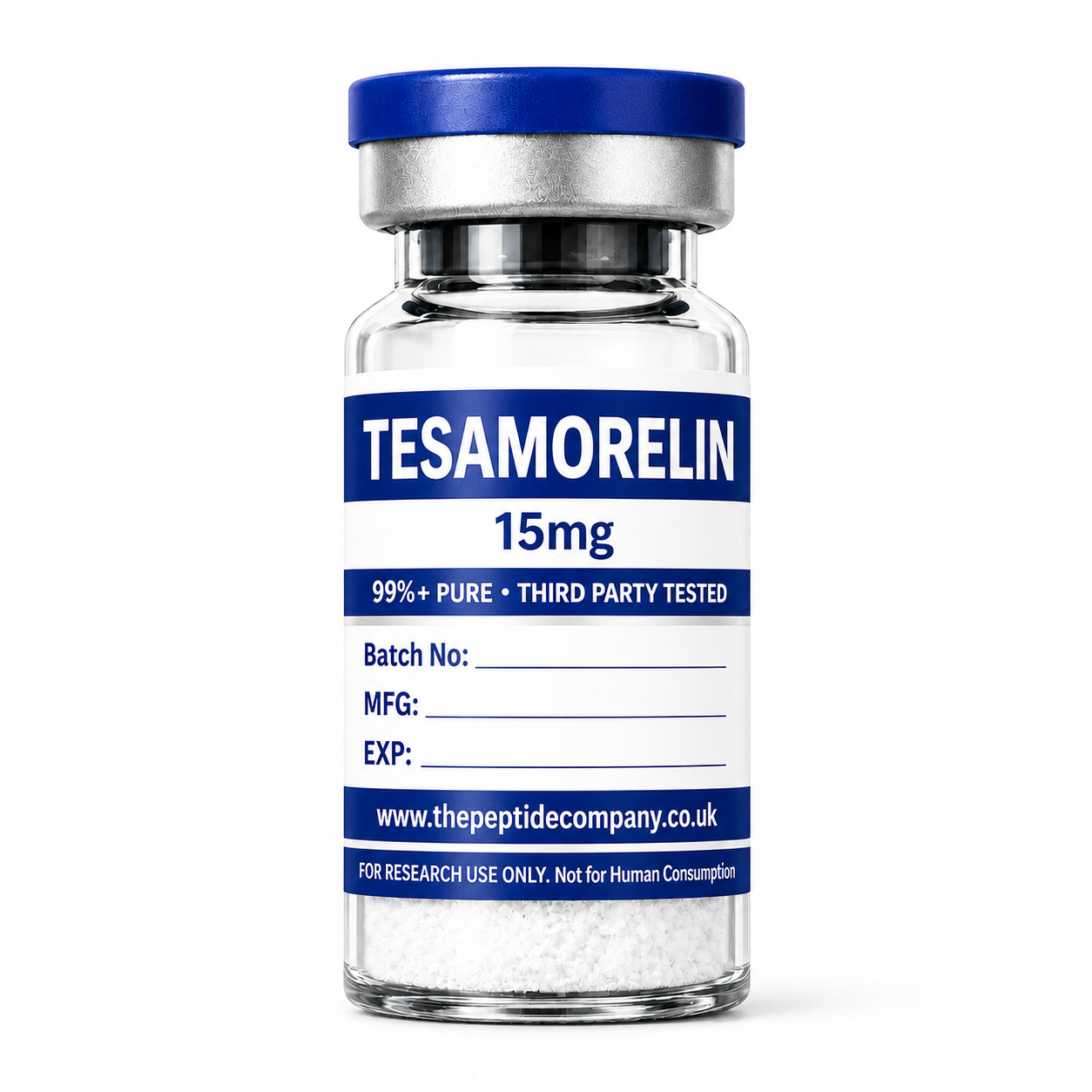
What form is supplied?Tesamorelin is supplied as a lyophilised powder.
Why is lyophilised powder used?Freeze-drying improves stability during storage and transportation.
How should Tesamorelin be stored?Researchers generally store lyophilised peptides frozen until required for laboratory use.
Why is purity important?High purity helps improve consistency and reliability across scientific investigations.
What research fields commonly involve Tesamorelin?Areas include growth hormone research, endocrine signalling studies, metabolic investigations, healthy ageing research, body composition research, and hormonal regulation studies.
How does Tesamorelin differ from Ipamorelin?Researchers study Tesamorelin for its interaction with GHRH pathways, while Ipamorelin investigations focus on growth hormone secretagogue receptor activity.
Explore Related Research Guides
Researchers interested in Tesamorelin may also wish to explore the following educational resources. They provide additional information regarding peptide science, storage considerations, laboratory handling procedures and ongoing areas of biological research.
Rachel Stanway –
Tesamorelin 15mg Review:
Premium Peptide for Visceral Fat Loss, Body Recomposition & Anti-Aging
I’ve been using Tesamorelin 15mg from the peptide company, and it’s an outstanding research peptide.
This high-purity Tesamorelin stands out as a potent growth hormone-releasing hormone (GHRH) analog that delivers reliable results for targeted fat reduction and overall wellness research.

Key Benefits I Noticed:
• Powerful visceral fat reduction — effectively targets stubborn abdominal and deep belly fat while supporting improved waist circumference and body composition. 
• Enhanced lean muscle preservation and growth — helps increase muscle area and density alongside fat loss for better overall physique. 
• Improved lipid profile and metabolic health — supports healthier cholesterol levels and insulin sensitivity. 
• Anti-aging and cognitive support — promotes vitality, better energy, and potential benefits for memory and executive function. 
• Increased natural growth hormone and IGF-1 — stimulates pulsatile GH release without the harsh spikes of direct HGH.
What impresses me most about Tesamorelin 15mg is its strong safety profile in research settings and focused action on visceral adipose tissue with minimal disruption elsewhere.
It’s ideal for those exploring Tesamorelin benefits for visceral fat loss, muscle preservation, body recomposition, and anti-aging.