
⚠
Strictly for Research Purposes Only
This product: Retatrutide is not intended for human consumption, diagnostic, or therapeutic use. It has not been evaluated or approved by the FDA. Misuse is strictly prohibited and may result in legal consequences.
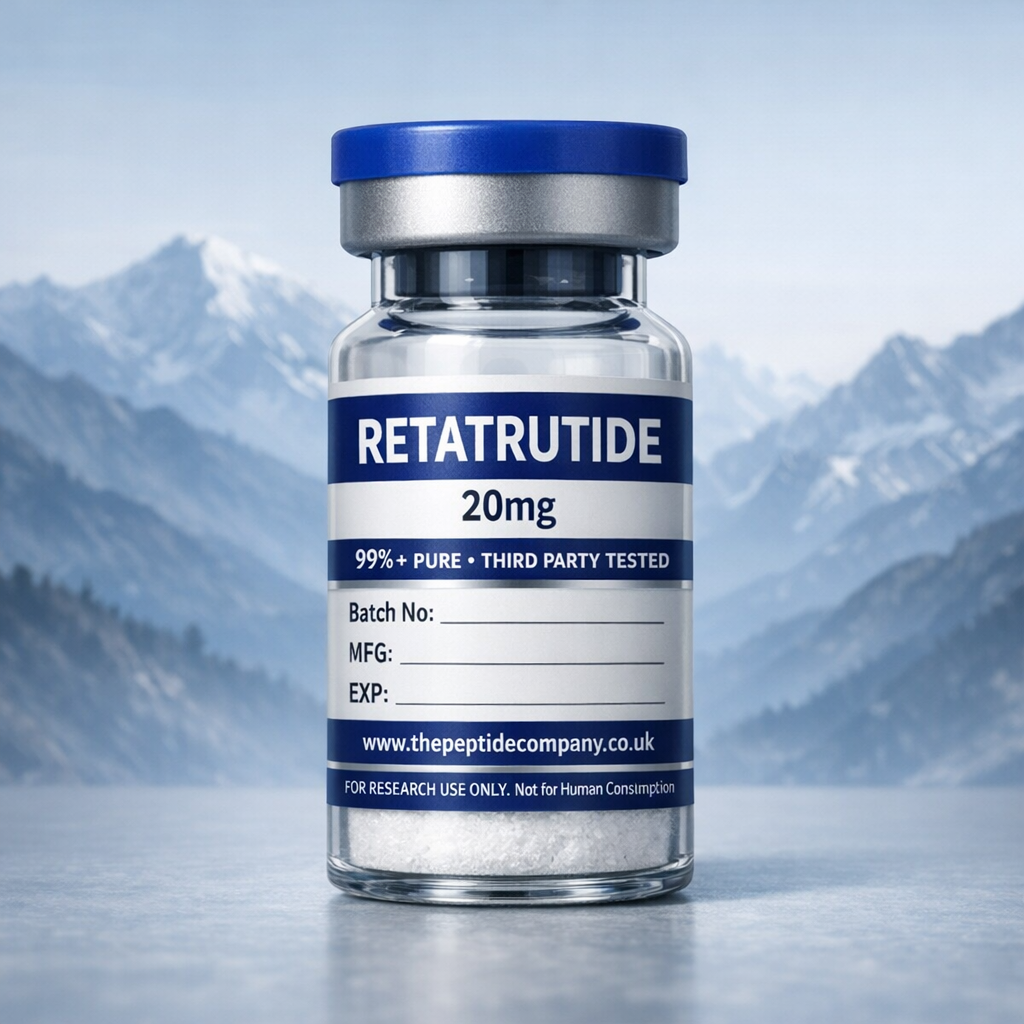
Retatrutide Purity
≥99%
Receptor Targets
GLP-1, GIP & GCGR
Form
Lyophilized Powder
Storage
-20°C
🔬 Technical Specifications
Retatrutide (LY3437943)
Molecular Formula
C221H342N46O68
Molecular Weight
~4731.4 g/mol
AMOUNT PER VIAL
20mg per vial
Packaging
Sterile 2ml vials
Shipping & Handling
✓ Shipped in temperature-controlled packaging
✓ Same-day dispatch for orders before 2PM
✓ Discrete, plain packaging
🧪 Scientific Background
Retatrutide is an investigational single peptide with agonist activity at the glucose-dependent insulinotropic polypeptide (GIP), GLP-1, and glucagon receptors. Because of this unique “triple agonist” mechanism, it is widely studied for its profound effects on weight regulation and metabolic health.
Mechanism of Action: By simultaneously activating GLP-1, GIP, and glucagon receptors, retatrutide targets multiple metabolic pathways. GLP-1 and GIP agonism support insulin regulation and satiety, while glucagon receptor agonism increases energy expenditure and promotes fat oxidation.
Reconstitution: Requires reconstitution with bacteriostatic water or another suitable solvent before use. Store at –20°C for long-term stability and protect from light.
Research Applications
• Appetite regulation and satiety signalling
• Energy expenditure and thermogenesis
• Glucose metabolism and insulin sensitivity
• Body composition and fat mass reduction
Scientific Studies: Efficacy & Safety
- Triple-Hormone-Receptor Agonist Retatrutide for Obesity — A Phase 2 Trial
Jastreboff AM, et al. (NEJM, 2023)- Key Findings: A 48-week, phase 2 trial involving adults with obesity showed that retatrutide treatment resulted in substantial reductions in body weight. Participants receiving the highest dose experienced a mean weight reduction of 24.2% at 48 weeks.
- PubMed Link
- Retatrutide for people with type 2 diabetes: a phase 2 trial
Rosenstock J, et al. (The Lancet, 2023)- Key Findings: In participants with type 2 diabetes, retatrutide showed clinically meaningful improvements in glycaemic control and robust reductions in body weight. The safety profile was consistent with other incretin-based therapies, with mostly mild-to-moderate gastrointestinal side effects.
- PubMed Link
Verified Feedback
Customer Reviews
Customer feedback for The Peptide Company products.
★★★★★
Cutting-Edge Research Tool
Retatrutide from The Peptide Company has been a breakthrough for my studies on metabolic regulation. The product is of exemplary quality, with reliable purity and potency. It arrived quickly, securely packaged, and with a clear COA for peace of mind. I’m thoroughly impressed and will be reordering!
★★★★★
Unmatched Quality for Research
I’ve been using Retatrutide for advanced research, and The Peptide Company’s product has delivered fantastic results. The purity and consistency of the peptide are outstanding, and I appreciate the transparency with third-party testing. Shipping was efficient, and the packaging was top-notch. Highly recommend!

Richard Noble –
As a triple agonist (GLP-1, GIP, and glucagon), animal studies have shown it delivers superior appetite suppression, fat burning, and weight loss compared to Semaglutide or Tirzepatide.
Studies on mice have shown significant, steady fat loss,better blood sugar control, and impressive body recomposition results.
The Retatrutide 20mg comes with excellent purity and fast, noticeable effects.
Highly recommend this advanced peptide for anyone serious about researching metabolic optimization.
Michael –
Reta 20mg Review –
High Quality from The Peptide Company
If you’re wondering where can i buy retatrutide online, I can confidently recommend The Peptide Company.
I ordered their retatrutide 20mg and have been very impressed with the purity, consistency, and overall results.
The product mixes easily, feels premium, and has supported my goals effectively so far.
Delivery to the UK was quick, discreet, and reliable.
Pricing is competitive, especially when buying in this strength, making it excellent value for ongoing use.
From customer service to product performance, everything has been top-notch.
Whether you’re just starting or continuing your journey, this supplier stands out for quality and trustworthiness.
If you’re searching for a dependable place to purchase retatrutide, The Peptide Company is a great choice.
Ill definitely be ordering again.
Wesley Street –
Retatrutide 20mg Review
I was looking into retatrutide price per month UK and decided to order from The Peptide Company.
Their 20mg option works out really well cost-wise – I’ve calculated it’s one of the more affordable ways to run it monthly without compromising on quality.
The product itself is excellent. It mixes cleanly, the dosing is accurate, and I’ve been getting solid results with appetite suppression and steady progress.
Delivery was quick to the UK, properly packaged and discreet. No fuss at all.
For the money, I feel like I’m getting great value. It’s not the absolute cheapest out there, but the quality and reliability make the retatrutide price per month UK totally worth it compared to other places I checked.
Overall, I’m happy with my purchase and will definitely reorder when I need more.
If you’re watching your monthly costs, this is a strong option.
Michelle Leatham –
Retatrutide 20mg my review
I wanted a trustworthy place to buy reta and after some research I chose The Peptide Company.
Their 20mg has been a great buy so far.
The peptide mixes easily and stays nice and clear, which I take as a sign of good quality.
I’ve been using it for a few weeks and I’m getting great results with steady progress toward my goals.
Delivery was quick and well packaged, everything arrived in perfect condition.
Customer service was friendly and responsive when I had a couple of questions before placing my order.
Overall I’m very happy with both the product and the whole experience.
If you’re looking to buy reta, this is a reliable supplier I’d recommend.
I’ll defo be ordering again.