
Case Study 04 • Peptide Comparison
Retatrutide vs Tirzepatide vs Semaglutide — The Ultimate UK Peptides Comparison
Compare triple, dual, and single receptor agonist activity across three of the most discussed metabolic research peptides.
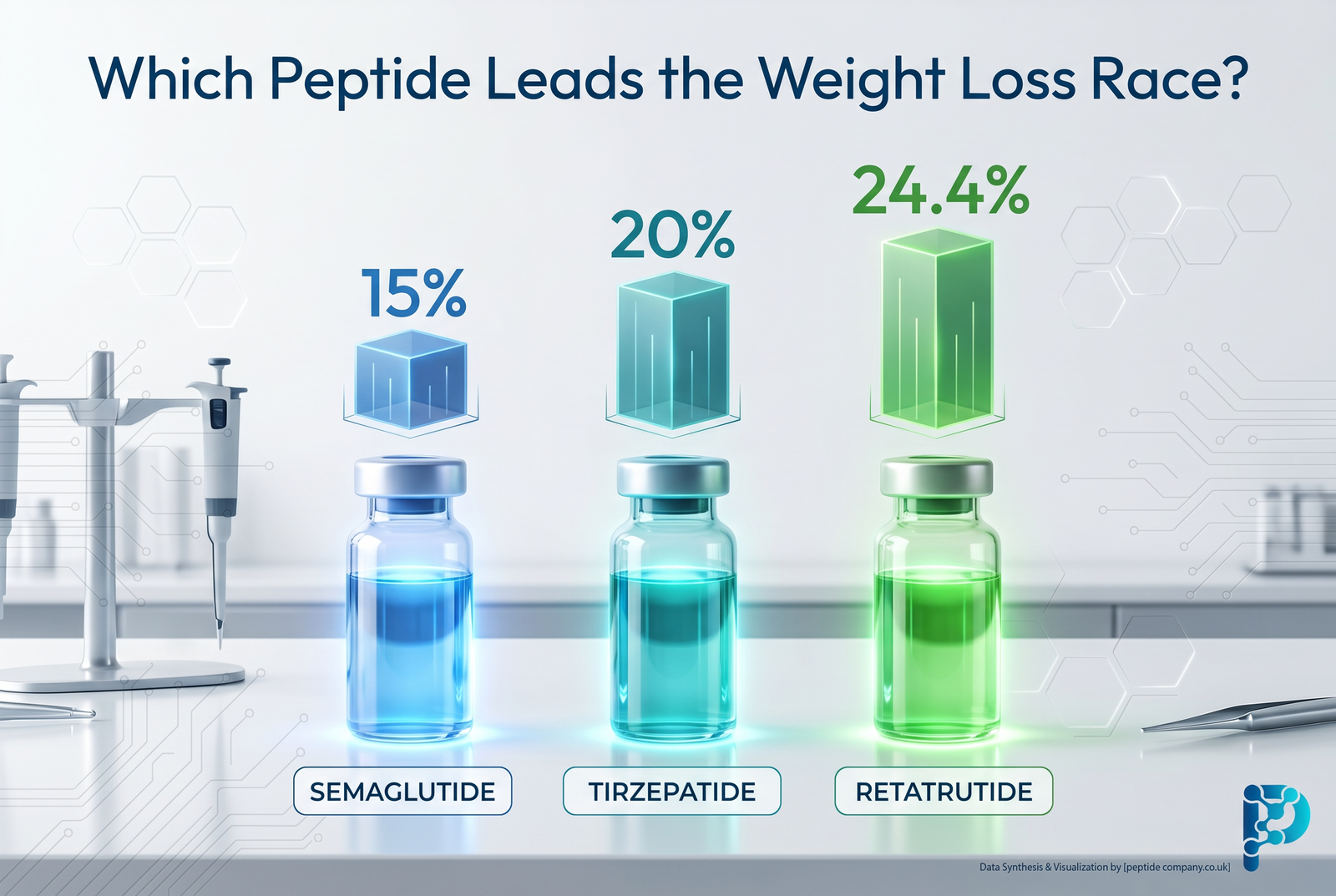
The Peptide Showdown — Who Leads the Weight-Loss Research Race?
Retatrutide, tirzepatide, and semaglutide are frequently compared because each one is connected to metabolic and body-weight research, but they differ significantly in receptor activity.
Comparative Results from Clinical Research
| Peptide | Mean Weight Loss | Key Mechanism |
|---|---|---|
| Retatrutide | Up to 24.4% | GLP-1, GIP, and glucagon receptor activity |
| Tirzepatide | Approximately 20% | GLP-1 and GIP receptor activity |
| Semaglutide | Approximately 15% | GLP-1 receptor activity |
- Retatrutide: relevant where researchers want to study triple pathway metabolic activity.
- Tirzepatide: relevant for dual incretin pathway research involving GLP-1 and GIP.
- Semaglutide: relevant for GLP-1-focused appetite and glycaemic research models.
What Does This Mean for UK Researchers?
Retatrutide’s triple agonist design gives it a wider receptor profile, making it a compelling candidate for research where appetite regulation, glucose metabolism, fat oxidation, and energy expenditure are all relevant.
Research-use notice: This comparison is for educational and laboratory research context only.
It is not a treatment recommendation and does not provide human-use guidance.
Ready to Compare These Peptides in Your Own Research?
Explore research-grade retatrutide and continue reading the full retatrutide guide for detailed comparison context.