
Retatrutide Mechanism of Action — The Triple Agonist Revolution
A clear breakdown of how retatrutide interacts with GLP-1, GIP, and glucagon receptor pathways in metabolic research.
What Makes Retatrutide Different?
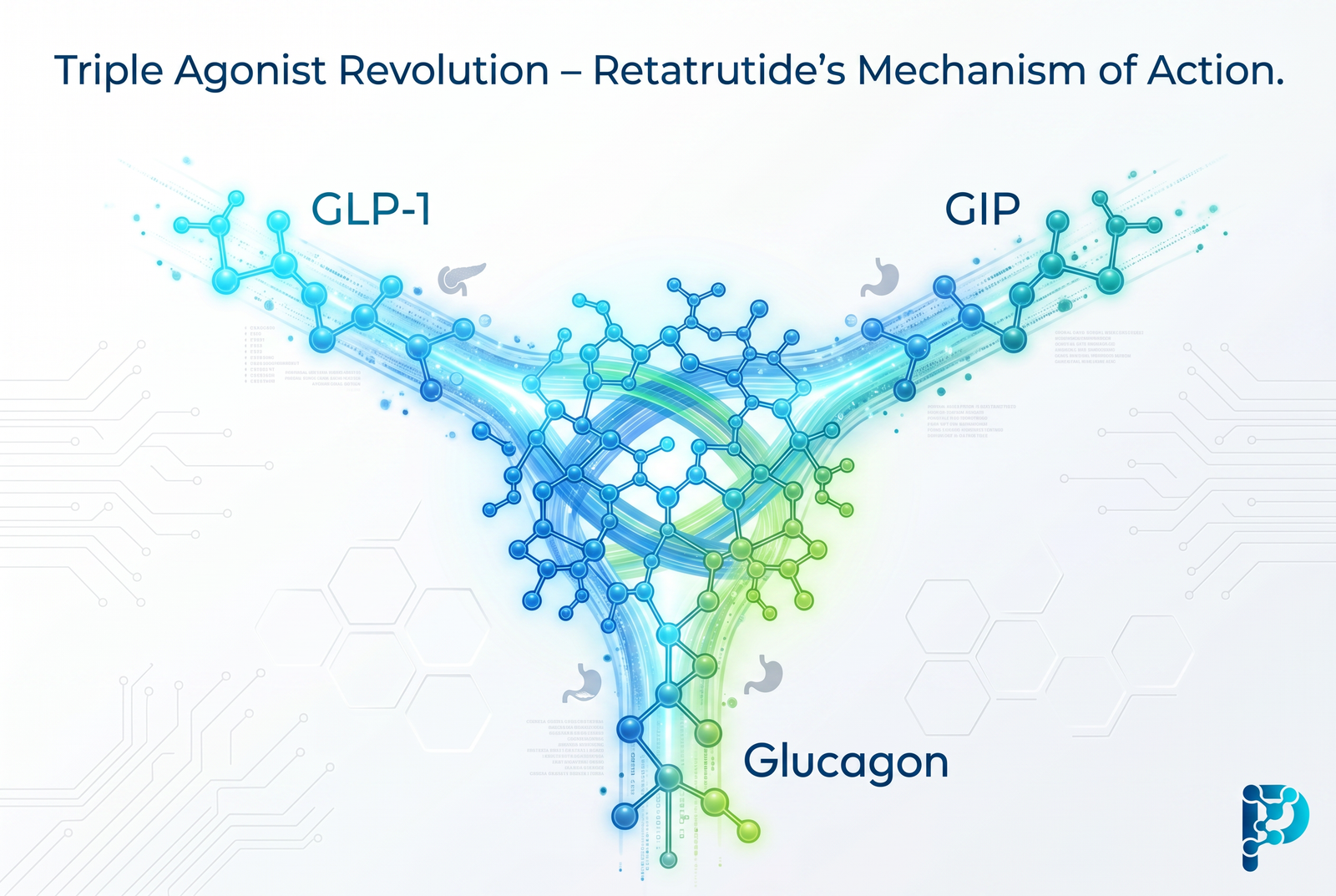
Retatrutide, also known as LY3437943, is engineered to activate three metabolic receptor pathways: GLP-1, GIP, and glucagon. This makes it different from single-pathway compounds and dual agonists commonly discussed in metabolic research.
The Science Behind the Synergy
- GLP-1 receptor activation: studied for its role in appetite signalling, insulin secretion, and gastric-emptying pathways.
- GIP receptor activation: studied for insulin secretion, lipid metabolism, and broader metabolic pathway interaction.
- Glucagon receptor activation: studied for energy expenditure, fat oxidation, and metabolic rate-related research models.
Why Triple Agonism Matters
By engaging three receptor systems at once, retatrutide creates a broader research framework for studying appetite regulation, glycaemic response, lipid metabolism, energy expenditure, and body-weight change.
Evidence from Preclinical and Clinical Research
Research discussions around retatrutide highlight its balanced activity across the three receptors, with studies exploring weight reduction, glycaemic control, and metabolic improvement outcomes.
Why UK Researchers Are Paying Attention
With obesity and metabolic disease remaining important public health and research challenges in the UK, retatrutide’s triple agonist profile offers a valuable model for advanced metabolic investigation.
Want to Study the Triple Agonist Pathway?
Access research-grade retatrutide and explore the full guide covering receptor activity, clinical evidence, safety profile, and UK research context.