
The Peptide Company – Navbar

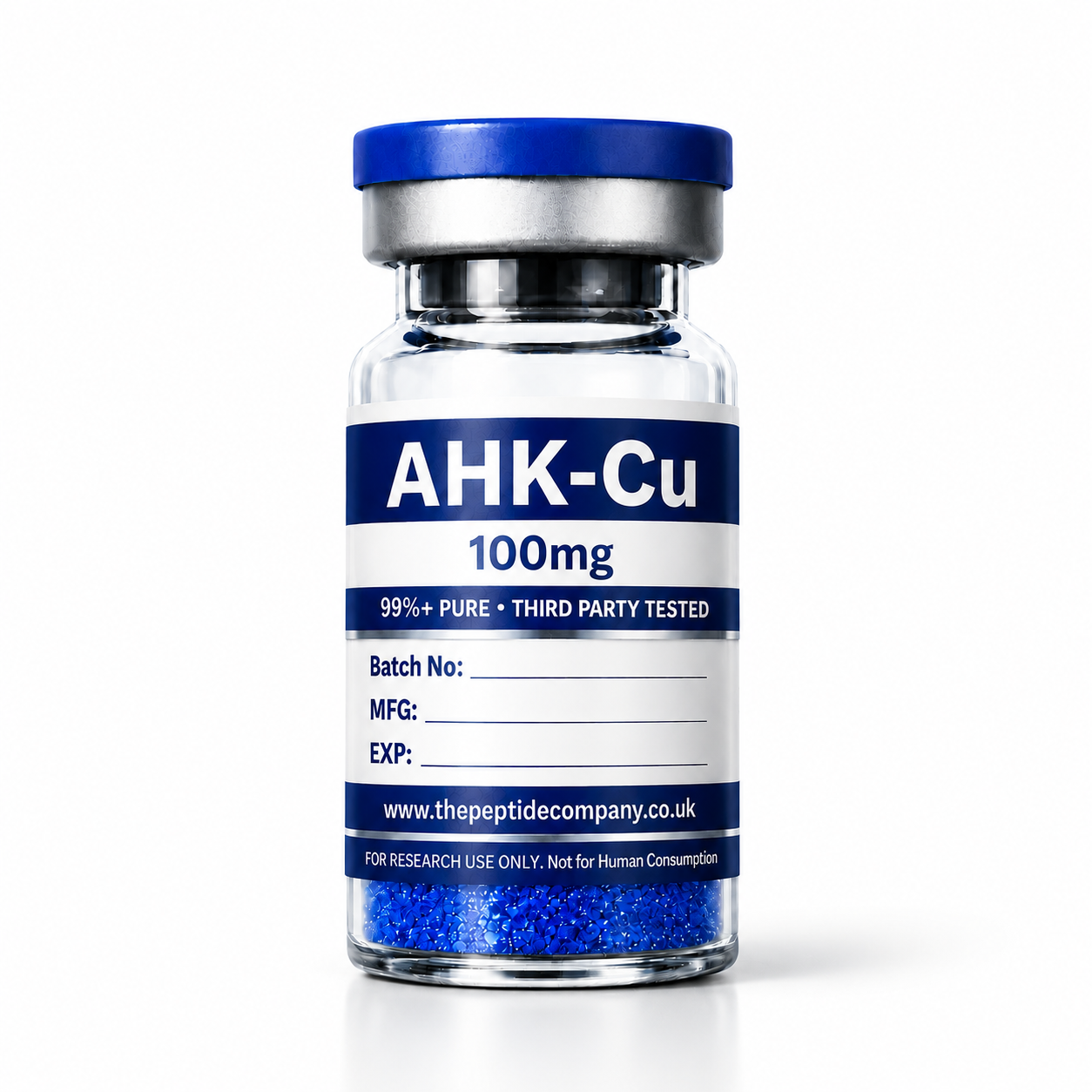
AHK-Cu 100mg

Rated 5.00 out of 5 based on 1 customer rating
(1 customer review)

£34.99

ProductAmountDiscount
Buy 2 - Save £102 £5.00 flat
Buy 3 - Save £303 - 4 £10.00 flat
Buy 5 - Save £755 + £15.00 flat
Category:

“`html

Strictly for Research Purposes Only
This product: AHK-Cu is not intended for human consumption, diagnostic, cosmetic, or therapeutic use. It has not been evaluated or approved by the FDA or MHRA. Misuse is strictly prohibited and may result in legal consequences.
Purity
≥99%
Appearance
Blue Lyophilised Powder
Grade
Research Grade
Storage
-20°C / -30°C
🔬 Technical Specifications
AHK-Cu
CAS Number
89030-95-5
Molecular Formula
C14H22CuN6O4
Purity
≥99%
Appearance
Blue Lyophilised Powder
Quantity
100mg per vial
Storage
-20°C Refrigerated / -30°C Frozen
Reconstitution
Sterile Water or Bacteriostatic Water
Shipping & Handling
✓ Shipped in protective sealed pouch packaging
✓ Stored dry and cool before dispatch
✓ Discreet plain packaging
🧪 Scientific Background of AHK-Cu
AHK-Cu, also known as Alanyl-Histidyl-Lysine Copper, is a synthetic copper-binding tripeptide that has generated considerable interest within peptide and cellular biology research. The peptide consists of three amino acids — alanine, histidine and lysine — bound to a copper ion, creating a stable copper peptide complex.
Researchers frequently investigate AHK-Cu in studies involving cellular signalling, dermal papilla cell biology, tissue maintenance and hair follicle research. Its copper-binding structure has made it an important compound of interest within broader copper peptide research.
Mechanism of Action
AHK-Cu is studied because copper peptides may participate in multiple biological signalling pathways. Researchers continue investigating interactions involving:
  • Cellular communication pathways
  • Growth factor signalling
  • Extracellular matrix regulation
  • Dermal papilla cell activity
  • Tissue maintenance mechanisms
  • Copper transport processes
Scientific investigations have explored how AHK-Cu may influence cellular environments associated with hair follicle biology and epithelial tissue research.
Key Research Areas
  • Hair follicle biology research
  • Dermal papilla cell investigations
  • Cellular signalling studies
  • Copper peptide research
  • Tissue maintenance research
  • Skin biology investigations
Related Research Compounds
  • GHK-Cu
  • BPC-157
  • TB-500
  • Ipamorelin

Scientific Studies: Efficacy & Safety

Landmark Research Studies
  • 1. Human Hair Follicle Growth Study — Archives of Pharmacal Research, 2007

    Authors: Pyo HK, Yoo HG, Won CH, Lee SH, Kang YJ, Eun HC, Cho KH, Kim KH

    • Study Design: Researchers evaluated the effects of AHK-Cu, also described as L-Alanyl-L-Histidyl-L-Lysine Copper Complex, on isolated human hair follicles and cultured dermal papilla cells.
    • Key Findings: AHK-Cu stimulated elongation of human hair follicles in laboratory models. Increased proliferation of dermal papilla cells was observed. The study also reported an increased Bcl-2/Bax ratio associated with cell survival pathways and reduced expression of apoptosis-related markers including caspase-3 and PARP.
    • Scientific Relevance: Researchers concluded that AHK-Cu may support hair follicle growth mechanisms through increased dermal papilla cell activity in controlled laboratory conditions.
    Published In: Archives of Pharmacal Research (2007) | PubMed Reference Available
  • 2. Dermal Papilla Cell Proliferation & Anti-Apoptosis Research

    Research Focus: Human dermal papilla cell survival and proliferation pathways

    • Study Design: The investigation further examined how AHK-Cu affected the survival and growth characteristics of cultured human dermal papilla cells, which play an important role in hair follicle biology.
    • Key Findings: Significant increases in dermal papilla cell proliferation were observed at specific concentrations. Elevated expression of Bcl-2, an anti-apoptotic protein, was reported alongside reduced expression of Bax, a pro-apoptotic protein. Lower levels of cleaved caspase-3 and PARP markers were also identified.
    • Scientific Relevance: Findings suggested that AHK-Cu may influence cellular signalling pathways involved in follicular maintenance and cellular survival. These observations contributed to ongoing interest in copper peptides within hair follicle biology, dermal papilla research and cellular signalling investigations.
Ongoing Areas of Research
Researchers continue investigating AHK-Cu in several emerging scientific fields:
  • Hair follicle biology
  • Dermal papilla cell research
  • Copper peptide signalling
  • Cellular communication pathways
  • Extracellular matrix studies
  • Tissue maintenance research
  • Growth factor signalling investigations
As research develops, AHK-Cu remains an area of interest within peptide science due to its unique copper-binding structure and observed interactions with dermal papilla cells and follicular tissue models.
Explore Related Research Compounds

“`

Additional information

“`html

Strictly for Research Purposes Only

AHK-Cu is supplied strictly for laboratory research purposes only. It is not intended for human or veterinary use, diagnostic use, therapeutic use, cosmetic use, or consumption. Researchers should handle this compound in accordance with appropriate laboratory protocols and applicable regulations.

Research Applications of AHK-Cu

AHK-Cu is a copper-binding tripeptide that has become an increasingly important subject within peptide research. Scientists continue investigating its role across several biological systems, particularly within studies involving cellular communication, tissue maintenance, and hair follicle biology.

One reason for growing scientific interest in AHK-Cu is its ability to form a stable complex with copper ions. Copper plays an important role in numerous biological processes, including cellular signalling, enzyme activity, connective tissue biology, and extracellular matrix regulation.

Researchers continue investigating how AHK-Cu may influence biological environments associated with tissue adaptation, dermal papilla cell activity, and cellular regulation.

Areas of scientific investigation include:

  • Hair Follicle Biology: AHK-Cu is frequently studied in relation to hair follicle environments and dermal papilla cell activity.
  • Cellular Signalling: Researchers investigate how copper peptide complexes may influence signalling pathways involved in tissue regulation.
  • Skin Research: AHK-Cu is explored within controlled research involving dermal biology, cellular adaptation, and tissue maintenance.
  • Dermal Papilla Cell Studies: Scientific investigations examine its interaction with specialised cells located at the base of hair follicles.
  • Copper Transport Mechanisms: AHK-Cu is studied as part of broader copper peptide research involving copper binding and biological transport.

As peptide research advances, AHK-Cu continues to attract attention because of its broad range of biological interactions in laboratory settings.

Understanding Copper Peptides

AHK-Cu belongs to a class of compounds known as copper peptides. These compounds consist of amino acid chains bound to copper ions, forming stable complexes that researchers investigate for their role in cellular communication, tissue maintenance, and biological regulation.

What Makes AHK-Cu Different?

AHK-Cu differs structurally from GHK-Cu while sharing many characteristics associated with copper-binding peptides. Researchers frequently compare these compounds because both are involved in copper peptide research, but they are often investigated in different biological contexts.

Composition

AHK-Cu consists of:

  • Alanine
  • Histidine
  • Lysine
  • Copper ion

Copper Peptide Research

Copper peptides have become an important area of scientific investigation because they may influence:

  • Cellular communication
  • Tissue maintenance
  • Extracellular matrix biology
  • Cellular adaptation
  • Growth factor signalling

Hair Follicle Research and Dermal Papilla Studies

One of the most frequently discussed areas of AHK-Cu research involves hair follicle biology. Researchers have explored how AHK-Cu may interact with dermal papilla cells, specialised cells located at the base of hair follicles.

Scientific investigations have examined:

  • Hair follicle elongation
  • Dermal papilla cell proliferation
  • Cellular signalling pathways
  • Tissue maintenance mechanisms

Published laboratory research investigating AHK-Cu has reported stimulation of human hair follicle elongation under controlled conditions, along with increased proliferation of dermal papilla cells.

Dermal Papilla Cell Research

Dermal papilla cells play an important role within hair follicle biology. Researchers continue investigating how peptide signalling may influence these cellular environments and their associated biological processes. This remains one of the most active areas of AHK-Cu research today.

AHK-Cu vs GHK-Cu

Researchers frequently compare AHK-Cu and GHK-Cu due to their structural similarities and shared classification as copper peptides. Although both compounds belong to the same broader research category, they are often investigated for different primary applications.

AHK-Cu Research Often Focuses On:

  • Hair follicle biology
  • Dermal papilla cells
  • Cellular signalling
  • Tissue maintenance

GHK-Cu Research Frequently Investigates:

  • Skin biology
  • Collagen-related pathways
  • Tissue regeneration
  • Cellular communication

Researchers continue studying the differences between AHK-Cu and GHK-Cu to better understand their biological interactions, copper-binding behaviour, and preferred research applications.

Storage and Handling Information

Proper storage is important for maintaining peptide integrity throughout research activities. Storage conditions may vary depending on laboratory methodology, product format, and institutional protocols.

Storage Recommendations

  • Lyophilised Powder: Prior to reconstitution, AHK-Cu should generally be stored frozen, commonly around -20°C.
  • Long-Term Storage: For extended storage, researchers may use lower frozen temperatures such as -30°C, depending on laboratory protocols.
  • Reconstituted Material: After reconstitution, researchers typically maintain refrigerated storage conditions and use solutions within appropriate laboratory timeframes.

Environmental Protection

  • Protect from excessive heat
  • Avoid direct sunlight
  • Minimise moisture exposure
  • Reduce contamination risks
  • Avoid repeated freeze-thaw cycles where possible

Laboratory Best Practices

  • Use sterile handling procedures
  • Wear appropriate PPE
  • Maintain accurate research records
  • Follow institutional protocols
  • Minimise contamination risks

AHK-Cu Research FAQ

What is AHK-Cu?
AHK-Cu is a copper-binding tripeptide composed of alanine, histidine, and lysine complexed with copper.
What does AHK-Cu stand for?
The name refers to the amino acids alanine, histidine, and lysine combined with copper to form a copper-peptide complex.
Why do researchers study AHK-Cu?
Scientists investigate AHK-Cu because of its involvement in cellular signalling, tissue maintenance, copper peptide biology, and hair follicle research.
Is this product intended for human consumption?
No. AHK-Cu is supplied strictly for laboratory and research purposes only. It is not intended for human or veterinary use.
What form is supplied?
AHK-Cu is commonly supplied as a lyophilised powder for research use.
Why is lyophilised powder used?
Lyophilisation is a freeze-drying process that helps improve peptide stability during storage and transportation.
How should AHK-Cu be stored?
Researchers generally store lyophilised AHK-Cu frozen until required for laboratory use, commonly around -20°C, while protecting it from heat, light, and moisture.
Why is purity important?
High purity helps improve consistency, reliability, and reproducibility across scientific investigations.
What research fields commonly involve AHK-Cu?
AHK-Cu is commonly studied in hair follicle research, dermal papilla cell studies, cellular signalling investigations, tissue maintenance research, and copper peptide research.

Explore Related Research Guides

Researchers interested in AHK-Cu may also find the following resources useful:

These educational resources provide additional information about peptide mechanisms, storage considerations, laboratory handling procedures, and ongoing areas of scientific investigation.

“`

1 review for AHK-Cu 100mg

  1. Rated 5 out of 5

    Richard Noble

    ⭐⭐⭐⭐⭐ 5/5 – Excellent AHK-Cu Copper Peptide from The Peptide Company!

    Review by: Richard Noble

    I’ve been dealing with thinning hair and some recession for the past couple of years, so I decided to try AHK-Cu copper peptide after reading about its targeted benefits for hair follicles.

    I ordered the research-grade AHK-Cu (and a blended GHK-Cu + AHK-Cu option) from this peptide company, and I’m genuinely impressed with the quality and results so far.

    My Experience After 6 Weeks:

    The product arrived quickly, well-packaged, and with clear reconstitution instructions. I mixed it into a simple topical serum and applied it to my scalp daily (sometimes combined with microneedling once a week).

    Within the first 2-3 weeks, I noticed significantly less shedding in the shower – that alone was a huge win.

    By week 4-5, new baby hairs started popping up along my hairline, and my existing hair feels thicker and healthier. The scalp feels less inflamed too.

    I’ve tried minoxidil before, but the AHK-Cu feels more natural and doesn’t cause the initial dread shed that some products do. It pairs amazingly with GHK-Cu for overall skin and scalp rejuvenation – my forehead lines even look a bit smoother as a bonus!

    Why I Recommend The Peptide Company:

    • High purity product that dissolves cleanly.
    • Great customer service and fast shipping.
    • Affordable compared to big brand serums with the same copper peptides.
    • No weird smells or sticky residue – absorbs fast.

    If you’re searching for AHK-Cu benefits, copper peptide hair growth, AHK-Cu vs GHK-Cu, or the best peptide company for quality research peptides, this is a solid choice.

    Results take consistency (I’m planning to continue for at least 3 months), but I’m already seeing real progress.

    Highly recommend for anyone struggling with hair thinning or wanting better skin repair. Will definitely repurchase!

    Would buy again?

    Absolutely. 10/10 for hair density support and anti-aging effects.

Add a review

Your email address will not be published. Required fields are marked *

Shopping Cart
Scroll to Top
Checkout Exclusive

Add Gummies to Your Order & Save 50%

Before you complete checkout, add our Himalayan Shilajit Gummies to your order and get an instant 50% discount.

🍬

Himalayan Shilajit Gummies – 3000mg

Limited checkout-only offer. Discount applies only to this gummies product.

Add Gummies & Save 50%