
GHK-Cu and Hair Growth — A Research Pathway for Follicle Support
A research-focused overview of GHK-Cu in hair follicle models, scalp inflammation, dermal papilla cell activity, angiogenesis, and hair-growth cycle research.
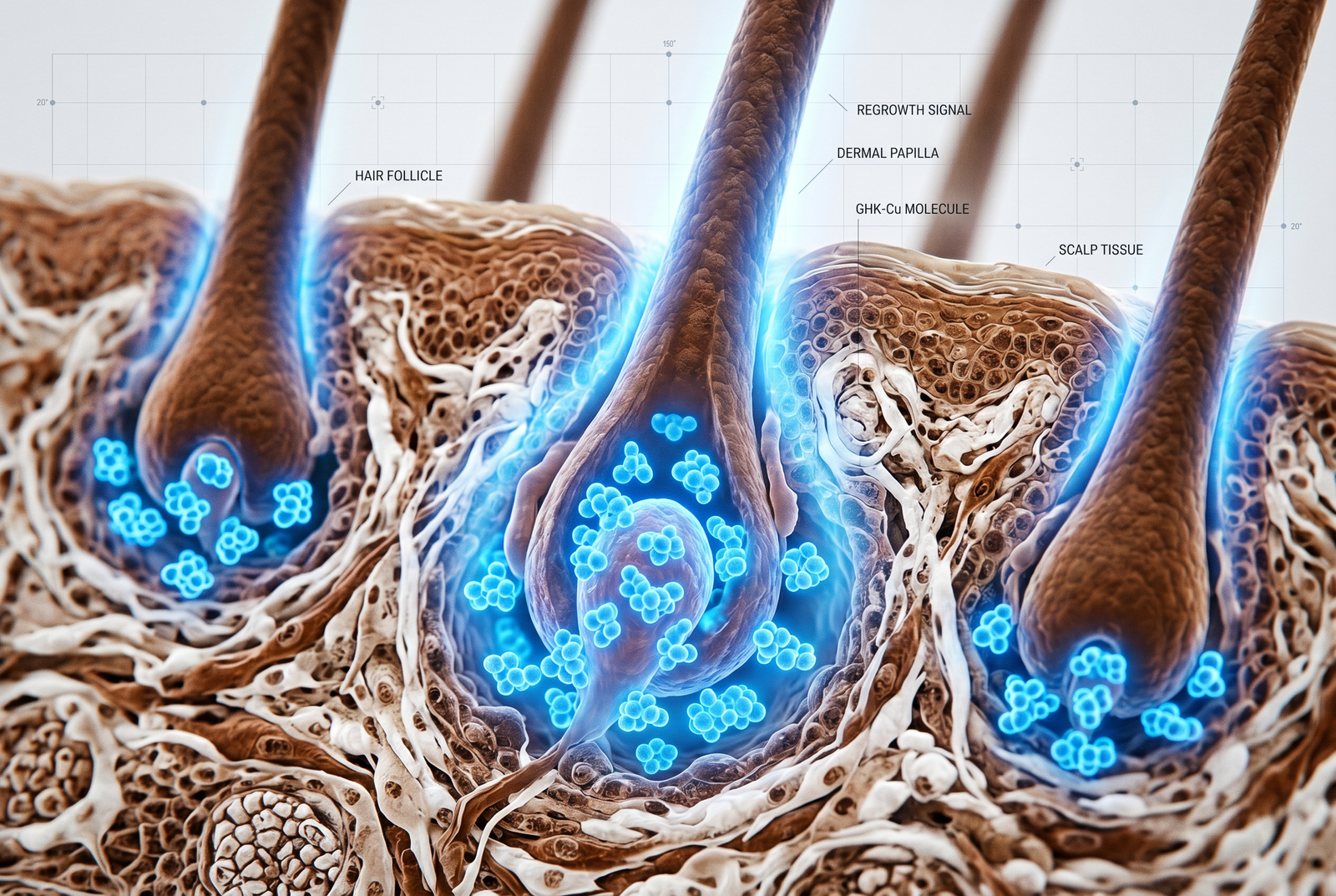
Why Hair Growth Research Matters
Hair-loss research often examines follicle activity, inflammation, blood flow, scalp environment, and the dermal papilla cells that help regulate the hair-growth cycle. GHK-Cu has become a peptide of interest in this area.
Study Background
Research into GHK-Cu and hair growth has focused on follicle-related cell activity, scalp health, angiogenesis, and inflammation control within hair-growth models.
Detailed Findings
- Dermal papilla cell activity: GHK-Cu has been studied for stimulating cells involved in initiating and maintaining the hair-growth cycle.
- Reduced scalp inflammation: Research suggests GHK-Cu may help create a healthier follicle-supportive environment.
- Improved blood-flow pathways: GHK-Cu is studied for angiogenesis, which may support nutrient delivery within scalp research models.
Why This Matters for UK Researchers
For UK researchers studying hair thinning, follicle biology, scalp inflammation, and regenerative peptide models, GHK-Cu offers a valuable research pathway.
Explore GHK-Cu Hair Growth Research
Source research-grade GHK-Cu and continue reading the full guide for deeper study context.