
GHK-Cu Anti-Inflammatory Benefits — Tissue Repair & Oxidative Stress Research
A research-focused guide to GHK-Cu in inflammation models, cytokine response, antioxidant activity, fibroblast function, and tissue-repair pathways.
Why Inflammation Research Matters
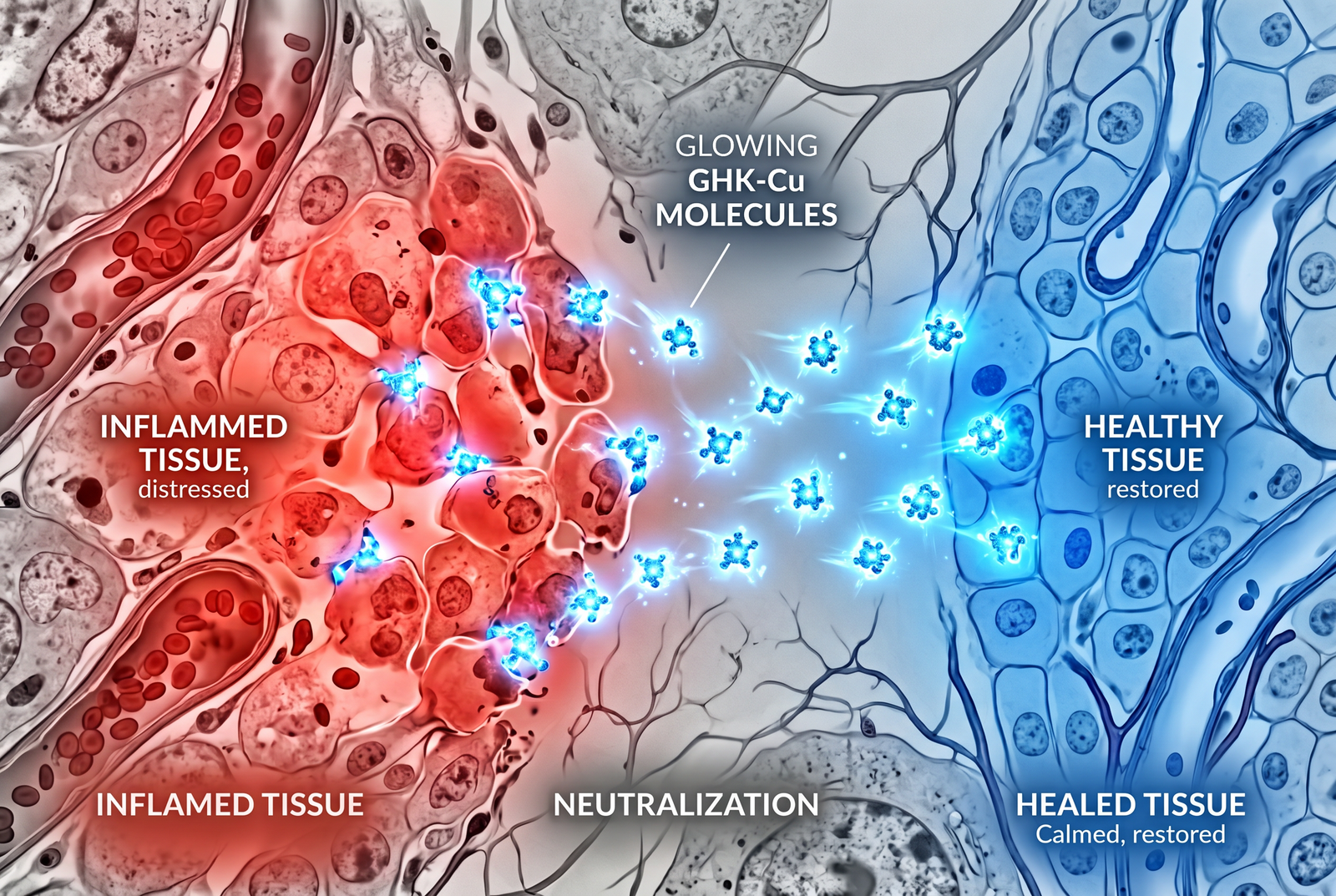
Chronic inflammation is connected to many tissue-damage and repair processes. In peptide research, GHK-Cu is studied for its ability to influence inflammatory pathways while also supporting repair-related activity such as fibroblast function and collagen production.
Study Background
Research into GHK-Cu’s anti-inflammatory activity has examined in vitro and in vivo models, with focus on cytokine modulation, oxidative stress, and tissue repair.
Detailed Findings
- Reduction in pro-inflammatory cytokines: GHK-Cu has been studied for reducing TNF-α, IL-6, and IL-1β markers.
- Tissue repair support: Research discusses fibroblast activity, collagen production, and repair of damaged tissue.
- Antioxidant effects: GHK-Cu is studied for reducing oxidative stress and free-radical-related damage.
Why UK Researchers Are Interested
GHK-Cu’s combined role in inflammation modulation and tissue repair makes it useful for studying chronic inflammation, skin repair, wound recovery, and regenerative peptide pathways.
Discover GHK-Cu for Inflammation Research
Explore research-grade GHK-Cu and read the complete guide for broader mechanism and application context.