
BPC-157 for Tissue Healing — The Science Behind Regeneration
A research-focused overview of how BPC-157 is studied in tissue repair, vascularisation, tendon healing, ligament recovery, and regenerative medicine models.
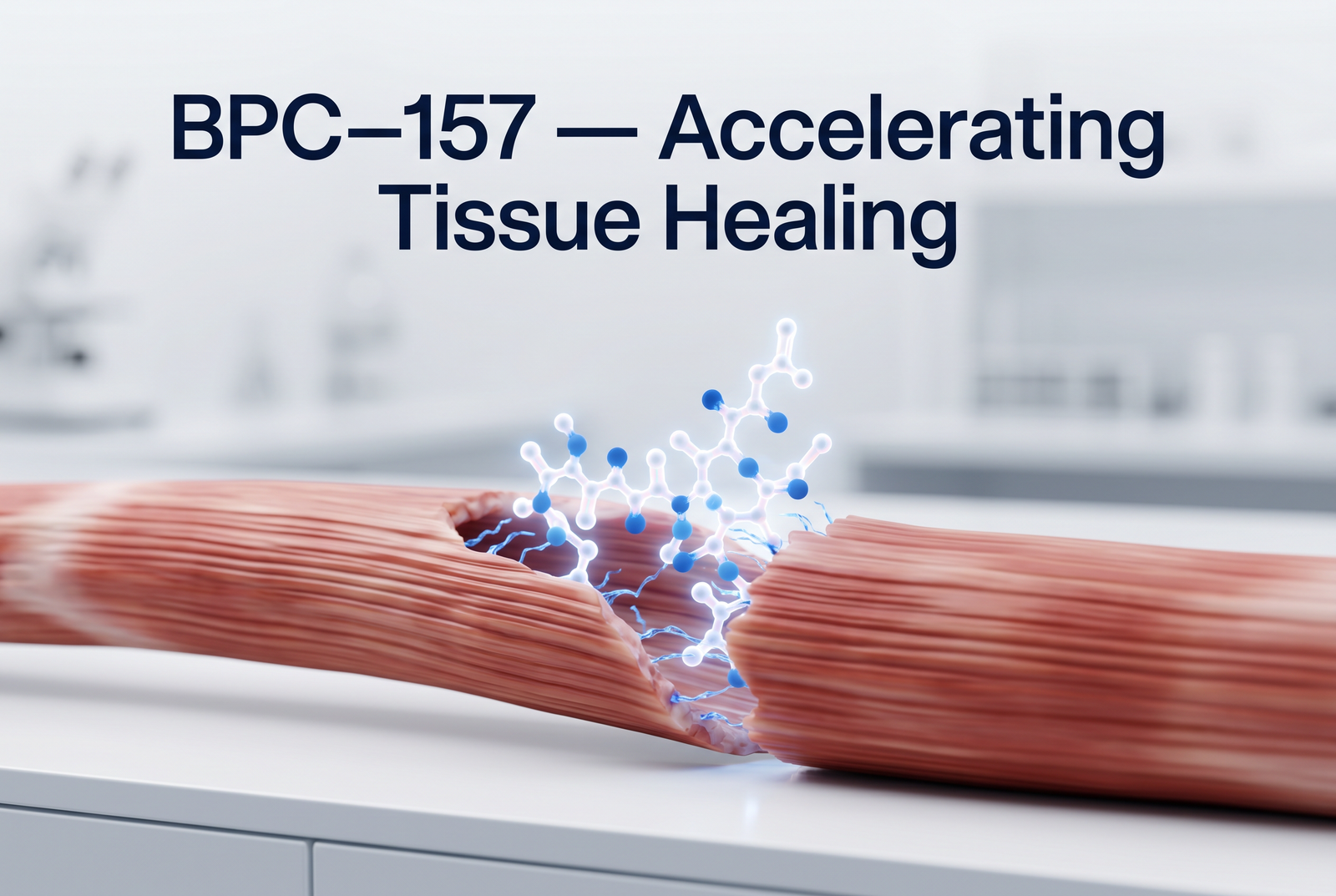
The Challenge of Tissue Repair
Injuries involving muscles, tendons, ligaments, and connective tissue can be difficult to study because the healing process depends on inflammation, blood supply, collagen formation, and cellular repair. BPC-157 has become a peptide of interest because of its reported role in regenerative research models.
What the Research Says
BPC-157 has been studied for its ability to support angiogenesis, the formation of new blood vessels, which is a key part of tissue repair. In preclinical research, BPC-157 has been investigated across tendon, ligament, wound-healing, and bone-repair models.
Key Findings
- Accelerated wound healing: BPC-157 is studied for faster soft-tissue repair in controlled research models.
- Improved vascularisation: Research suggests it may support blood flow to damaged tissue areas.
- Anti-inflammatory activity: BPC-157 is investigated for reducing swelling and inflammatory markers in injury models.
Why UK Researchers Are Interested
For UK-based researchers, BPC-157 provides a useful compound for studying tissue-repair mechanisms, sports-injury models, connective-tissue recovery, and regenerative medicine pathways.
Ready to Explore BPC-157 for Research?
Explore research-grade BPC-157 and continue reading the full BPC-157 research guide for deeper context.