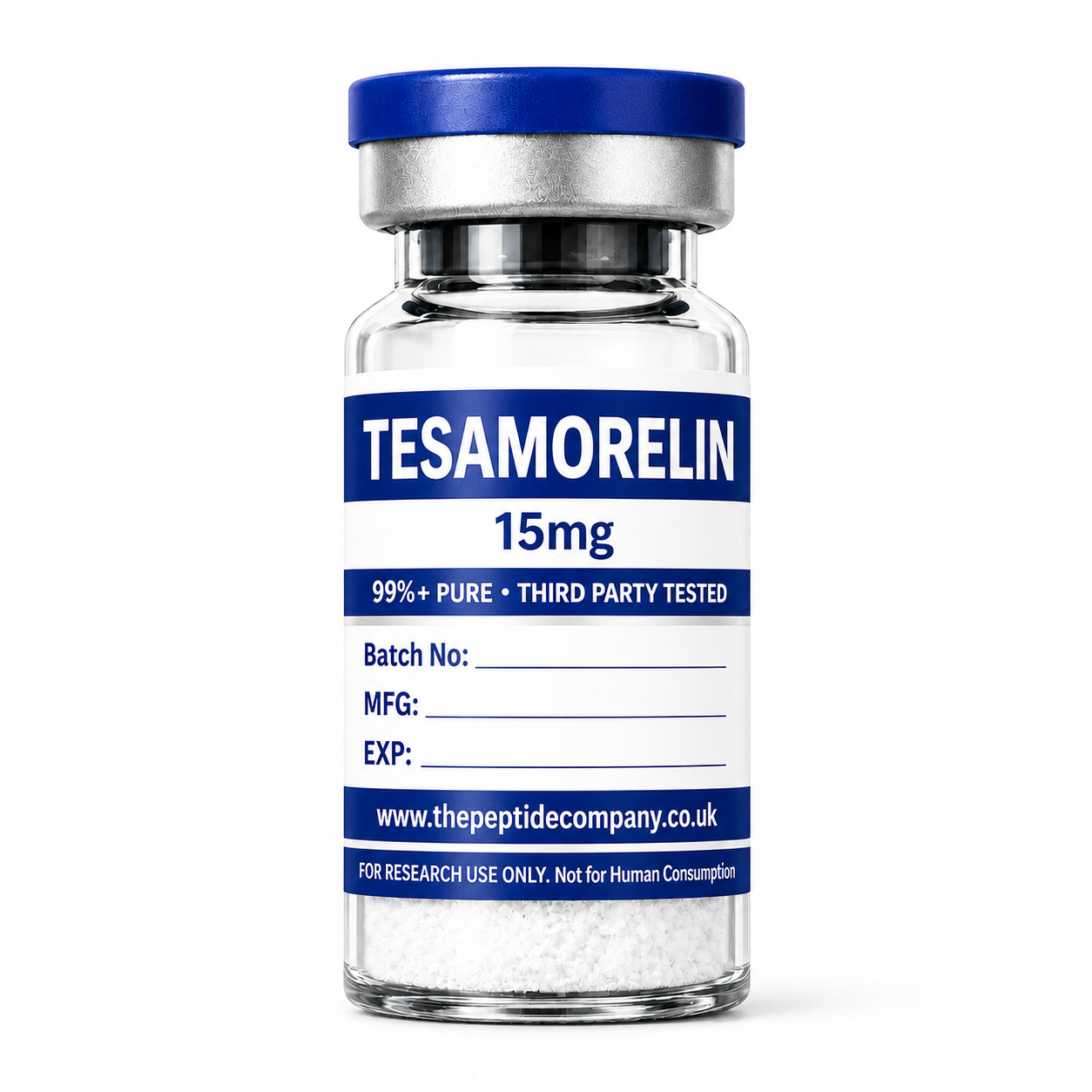
Tesamorelin 15mg
£84.99
Availability: 93 in stock
| Product | Amount | Discount |
|---|---|---|
| Buy 2 - Save £10 | 2 | £5.00 flat |
| Buy 3 - Save £30 | 3 - 4 | £10.00 flat |
| Buy 5 - Save £75 | 5 + | £15.00 flat |
Additional information
Tesamorelin is a synthetic analogue of Growth Hormone Releasing Hormone (GHRH) that has become an important subject of scientific investigation. Researchers continue exploring its interaction with growth hormone pathways and the broader physiological systems influenced by endocrine signalling.
One of the primary areas of investigation involves endogenous growth hormone release. Researchers study how Tesamorelin interacts with GHRH receptors and influences natural hormone signalling pathways.
Scientists continue exploring how growth hormone-related pathways may contribute to metabolic regulation and energy utilisation. Areas of interest include:
- Energy metabolism
- Nutrient utilisation
- Hormonal regulation
- Metabolic adaptation
- Cellular signalling
Researchers frequently investigate relationships between growth hormone signalling and body composition-related biological processes.
Tesamorelin remains an important tool for studying interactions within the endocrine system and understanding hormone communication pathways.
Because growth hormone production naturally changes over time, researchers continue investigating compounds such as Tesamorelin within healthy ageing and longevity-related studies.
As scientific understanding develops, Tesamorelin remains one of the most studied peptides within growth hormone releasing hormone research.
Tesamorelin is classified as a Growth Hormone Releasing Hormone analogue. Rather than acting as growth hormone itself, researchers investigate how Tesamorelin may stimulate the body’s natural production pathways.
Tesamorelin is studied because of its interaction with receptors involved in growth hormone regulation. Researchers continue examining how this interaction may influence:
- Growth hormone release
- Cellular communication
- Metabolic pathways
- Recovery processes
- Hormonal signalling networks
Scientific investigations frequently focus on understanding how natural hormone production can be regulated through biological signalling mechanisms.
This remains one of the key areas driving ongoing Tesamorelin research.
Tesamorelin has attracted attention because it provides researchers with a tool for investigating growth hormone regulation through natural physiological pathways.
Researchers continue studying how hormones communicate throughout the body and coordinate complex biological processes. Tesamorelin investigations frequently contribute to a better understanding of these signalling systems.
The growth hormone axis involves multiple interconnected pathways. Scientists explore how GHRH analogues such as Tesamorelin interact with:
- Growth hormone release
- Hormonal feedback mechanisms
- Metabolic regulation
- Cellular adaptation processes
Researchers continue examining how growth hormone-related signalling pathways influence broader physiological systems over time.
These investigations have helped establish Tesamorelin as an important compound within endocrine research.
Researchers often compare Tesamorelin with other peptides involved in growth hormone investigations.
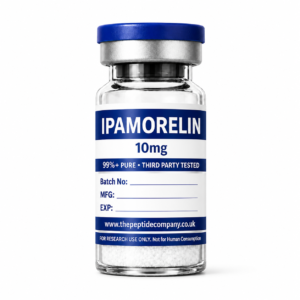
- Tesamorelin vs Ipamorelin: Tesamorelin primarily targets Growth Hormone Releasing Hormone pathways. Ipamorelin is studied for its activity at growth hormone secretagogue receptors. Because these mechanisms differ, researchers frequently compare their effects within laboratory models.
- Tesamorelin vs CJC-1295: Both compounds are investigated for their relationship with growth hormone release, although their structures and pharmacological characteristics differ.
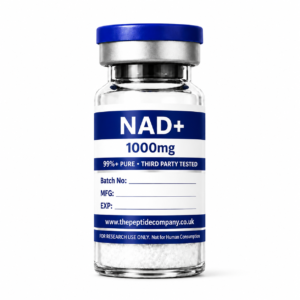
- Tesamorelin vs NAD+: NAD+ research focuses on cellular energy production and mitochondrial function. Tesamorelin research focuses on endocrine signalling and growth hormone pathways.
- Tesamorelin vs GHK-Cu: GHK-Cu is commonly studied for regenerative biology and cellular maintenance, whereas Tesamorelin research centres around hormone regulation.
Understanding these distinctions helps researchers select appropriate compounds for specific study objectives.
Growth Hormone Releasing Hormone is a naturally occurring signalling molecule responsible for stimulating growth hormone production within the body. Researchers continue studying GHRH because of its role in regulating:
- Growth hormone secretion
- Metabolic activity
- Cellular adaptation
- Recovery processes
- Hormonal communication
Scientific investigations frequently explore how GHRH interacts with other biological pathways to coordinate physiological responses. These studies help improve understanding of endocrine regulation and hormonal balance.
Because growth hormone influences multiple biological systems, compounds that affect GHRH pathways remain highly relevant within modern peptide research.
Maintaining peptide integrity is essential for reliable laboratory investigations.
Lyophilised Powder Storage
Prior to reconstitution, Tesamorelin should generally be stored frozen at approximately -20°C.
Reconstituted Material
Following reconstitution, researchers typically refrigerate solutions and utilise them within suitable laboratory timeframes.
Environmental Protection
To preserve quality, materials should be protected from:
- Direct sunlight
- Excessive heat
- Moisture exposure
- Contamination risks
Avoid Repeated Freeze-Thaw Cycles
Repeated freeze-thaw cycles may affect peptide stability and should generally be minimised.
Laboratory Best Practices
Researchers should:
- Use sterile handling procedures
- Wear appropriate PPE
- Maintain accurate records
- Follow institutional protocols
- Store materials correctly between uses
Researchers interested in Tesamorelin may also wish to explore the following educational resources. They provide additional information regarding peptide science, storage considerations, laboratory handling procedures and ongoing areas of biological research.
- Tesamorelin Complete Research Guide
- Ipamorelin Complete Research Guide
- What Are Peptides?
- Benefits of Peptides
- NAD+ Complete Research Guide
- GHK-Cu Complete Research Guide
- BPC-157 Complete Research Guide
- Wolverine Stack Complete Research Guide
- Semaglutide Complete Research Guide
- Retatrutide Complete Research Guide


Reviews
There are no reviews yet.