🧪 Understanding Bacteriostatic Water
What Is Bacteriostatic Water?
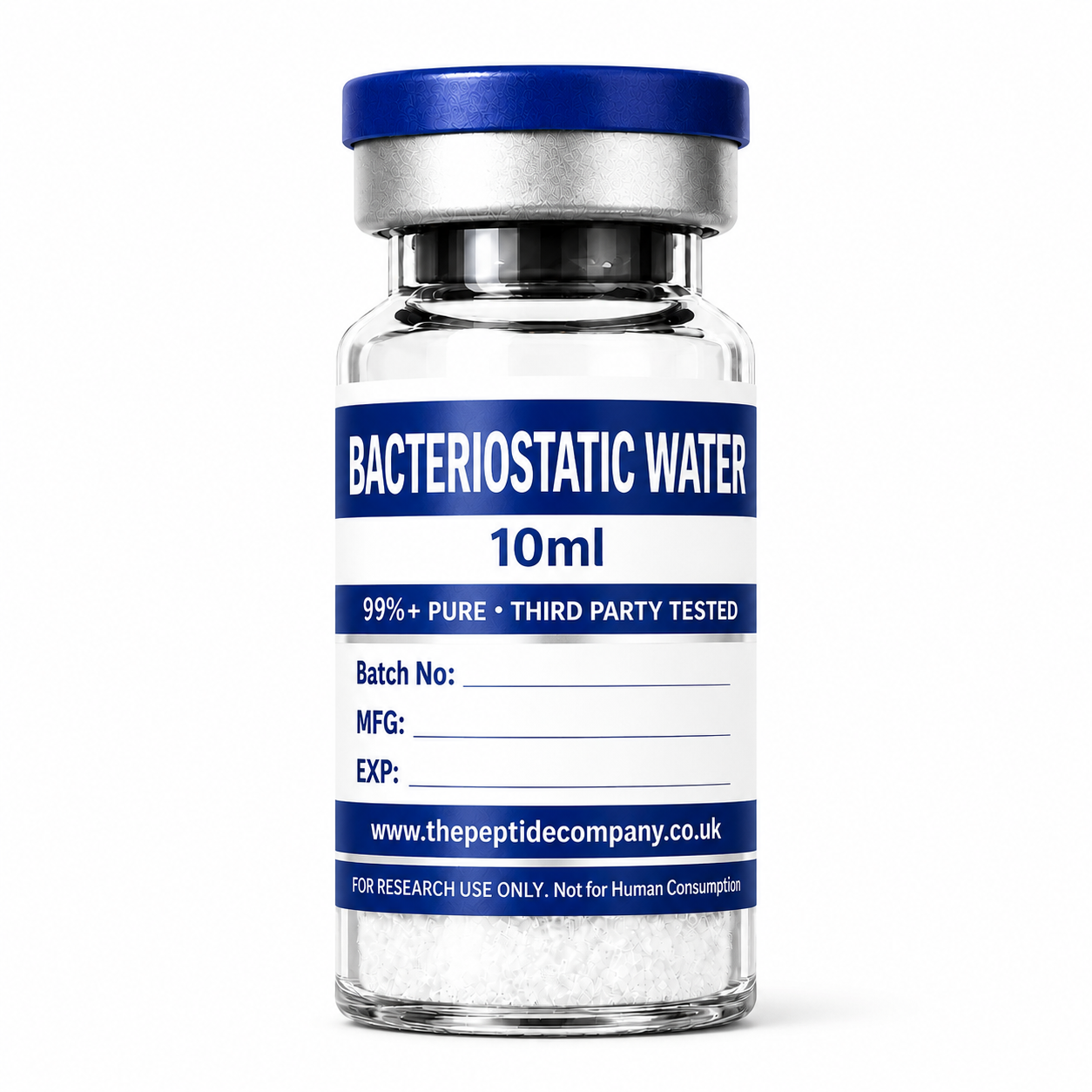
Bacteriostatic Water is a sterile, non-pyrogenic water preparation containing 0.9% benzyl alcohol as a preservative. The inclusion of benzyl alcohol helps inhibit the growth of many potentially contaminating bacteria, making it suitable for multiple withdrawals from the same vial when handled correctly.
Unlike standard sterile water, which is generally intended for single-use applications, bacteriostatic water is commonly used in situations where repeated access to the same vial may be required.
Key Characteristics
- Sterile and non-pyrogenic
- Contains 0.9% benzyl alcohol
- Multi-dose vial suitability
- Clear, colourless solution
- Designed for dilution and reconstitution purposes
- Widely used in laboratory and pharmaceutical environments
These characteristics have made bacteriostatic water one of the most commonly used aqueous vehicles for research and reconstitution applications.
🔬 Research Applications of Bacteriostatic Water
Laboratory and Research Use
Bacteriostatic water is frequently used as a reconstitution medium for lyophilised materials requiring dilution before use. Researchers often utilise bacteriostatic water when working with:
- Lyophilised peptides
- Protein-based compounds
- Research reagents
- Laboratory reference materials
- Multi-dose research preparations
The antimicrobial preservative provides an additional level of protection against contamination when multiple withdrawals are required from a single vial.
Peptide Research Applications
In peptide research environments, bacteriostatic water is frequently used when preparing:
- Retatrutide research compounds
- Semaglutide research compounds
- Tesamorelin research compounds
- Ipamorelin research compounds
- BPC-157 research compounds
- TB-500 research compounds
Researchers should always follow the handling and storage recommendations appropriate to their specific study protocols.
⚖️ Bacteriostatic Water vs Sterile Water
Understanding the Difference
Although they may appear similar, bacteriostatic water and sterile water have important differences.
Bacteriostatic Water
Contains:
- Sterile water
- 0.9% benzyl alcohol preservative
Benefits:
- Supports multi-dose use
- Helps inhibit bacterial growth
- Suitable for repeated withdrawals when handled appropriately
Sterile Water
Contains:
- Sterile water only
- No preservative
Characteristics:
- Typically intended for single use
- No bacteriostatic protection after opening
- Generally discarded after initial access
The primary distinction is the presence of benzyl alcohol, which helps suppress bacterial growth and allows repeated use under appropriate conditions.
📊 Understanding Benzyl Alcohol
Why Is Benzyl Alcohol Included?
Benzyl alcohol functions as a bacteriostatic preservative. Researchers and manufacturers use this ingredient because it helps reduce the likelihood of bacterial growth within the solution following puncture of the vial.
Advantages
The inclusion of benzyl alcohol may help:
- Improve multi-dose usability
- Support product stability
- Reduce contamination risks
- Extend usability after opening
This preservative system is one of the reasons bacteriostatic water remains widely used in research and pharmaceutical settings.
❄️ Storage and Handling Information
Storage Recommendations
Proper storage helps maintain product quality and sterility.
Recommended Storage Conditions
Store at:
- Room temperature
- Away from direct sunlight
- Away from excessive heat
- In original packaging where possible
Controlled room temperature storage is commonly recommended for bacteriostatic water products.
Handling Guidelines
Researchers should:
- Use sterile syringes and needles
- Clean vial stoppers before access
- Minimise unnecessary vial punctures
- Store securely between uses
- Follow laboratory handling procedures
Visual Inspection
Before use, researchers should ensure:
- Solution remains clear
- No visible particles are present
- Packaging remains intact
- No signs of contamination exist
📦 Multi-Dose Vial Advantages
Why Multi-Dose Vials Are Popular
Multi-dose containers provide several practical advantages within laboratory environments.
Reduced Waste
Researchers can access multiple aliquots from a single vial rather than opening a new container for each use.
Improved Convenience
A single vial can support multiple preparation sessions.
Consistent Preparation
Using the same reconstitution medium throughout a study may help improve consistency across experimental procedures.
The presence of benzyl alcohol allows bacteriostatic water to function effectively as a multi-dose preparation when appropriate aseptic techniques are followed.
❓ Frequently Asked Questions
What is bacteriostatic water?Bacteriostatic water is sterile water containing 0.9% benzyl alcohol as a preservative.
What does bacteriostatic mean?The term bacteriostatic refers to the ability to inhibit bacterial growth.
What is benzyl alcohol?Benzyl alcohol is a preservative commonly included in bacteriostatic water at a concentration of 0.9%.
Why is bacteriostatic water commonly used in peptide research?Researchers frequently use it as a reconstitution medium for lyophilised compounds.
Is bacteriostatic water supplied sterile?Yes. Bacteriostatic water is manufactured as a sterile preparation.
How should bacteriostatic water be stored?Store at room temperature away from direct heat and sunlight.
Why is bacteriostatic water different from sterile water?Bacteriostatic water contains benzyl alcohol while sterile water does not.
Can the same vial be accessed multiple times?Bacteriostatic water is designed for multi-dose use when appropriate sterile handling procedures are followed.
Why is sterility important?Maintaining sterility helps preserve research integrity and reduce contamination risks.
What research products commonly use bacteriostatic water?Researchers frequently use bacteriostatic water when preparing peptide and protein-based research materials.

Reviews
There are no reviews yet.