
UK-Based Research Peptide Supplier
Premium Research Peptides
UK-Based Supplier for Laboratory & Scientific Research Applications
Buy Peptides →Supplied strictly for laboratory research purposes only. Not intended for human consumption, medical use or self-administration.
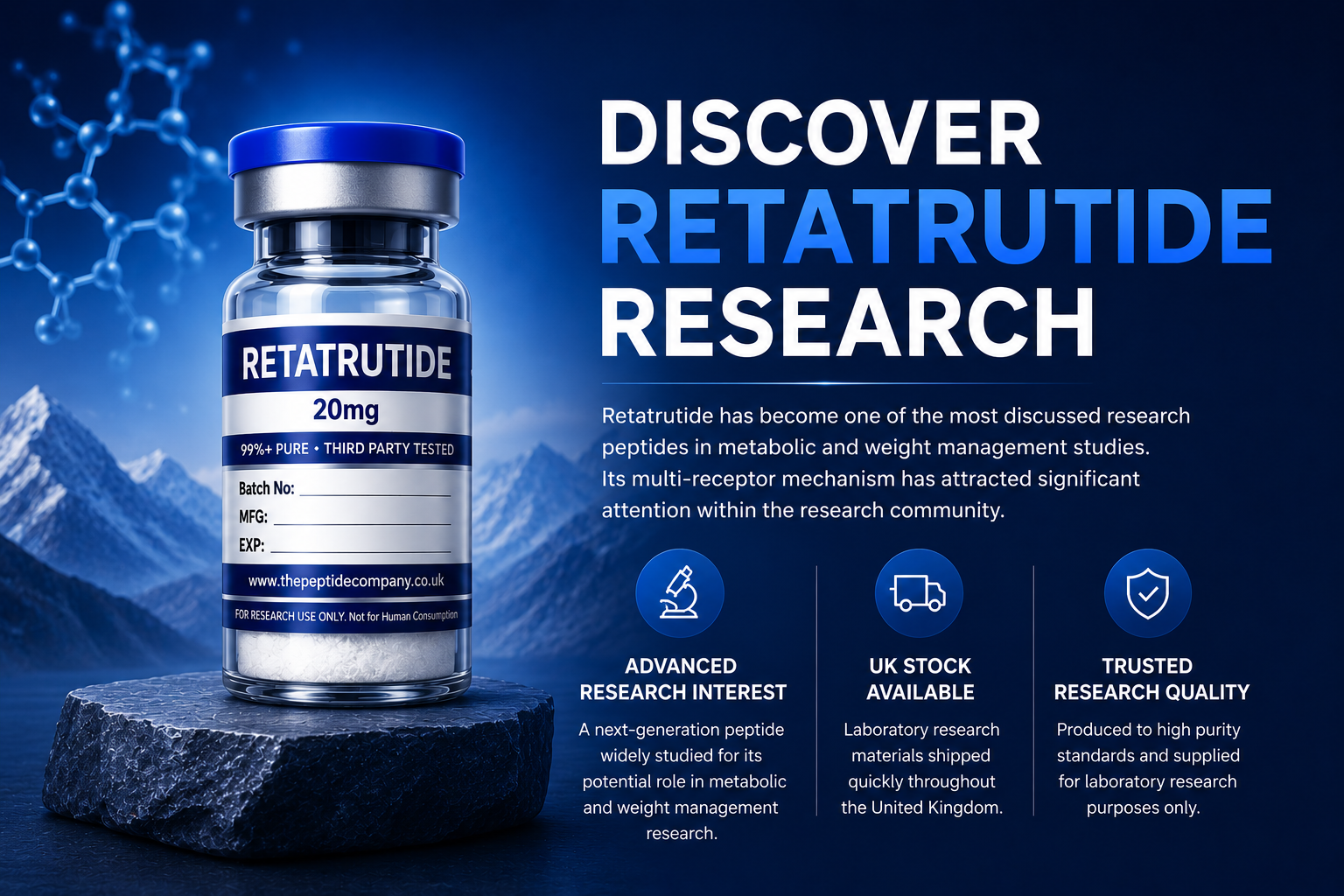
Discover Retatrutide Research
Advanced Research Interest
A next-generation peptide widely studied for its potential role in metabolic and weight management research.
UK Stock Available
Laboratory research materials shipped quickly throughout the United Kingdom.
Trusted Research Quality
Produced to high purity standards and supplied for laboratory research purposes only.
One of the UK's Most Popular Research Peptides
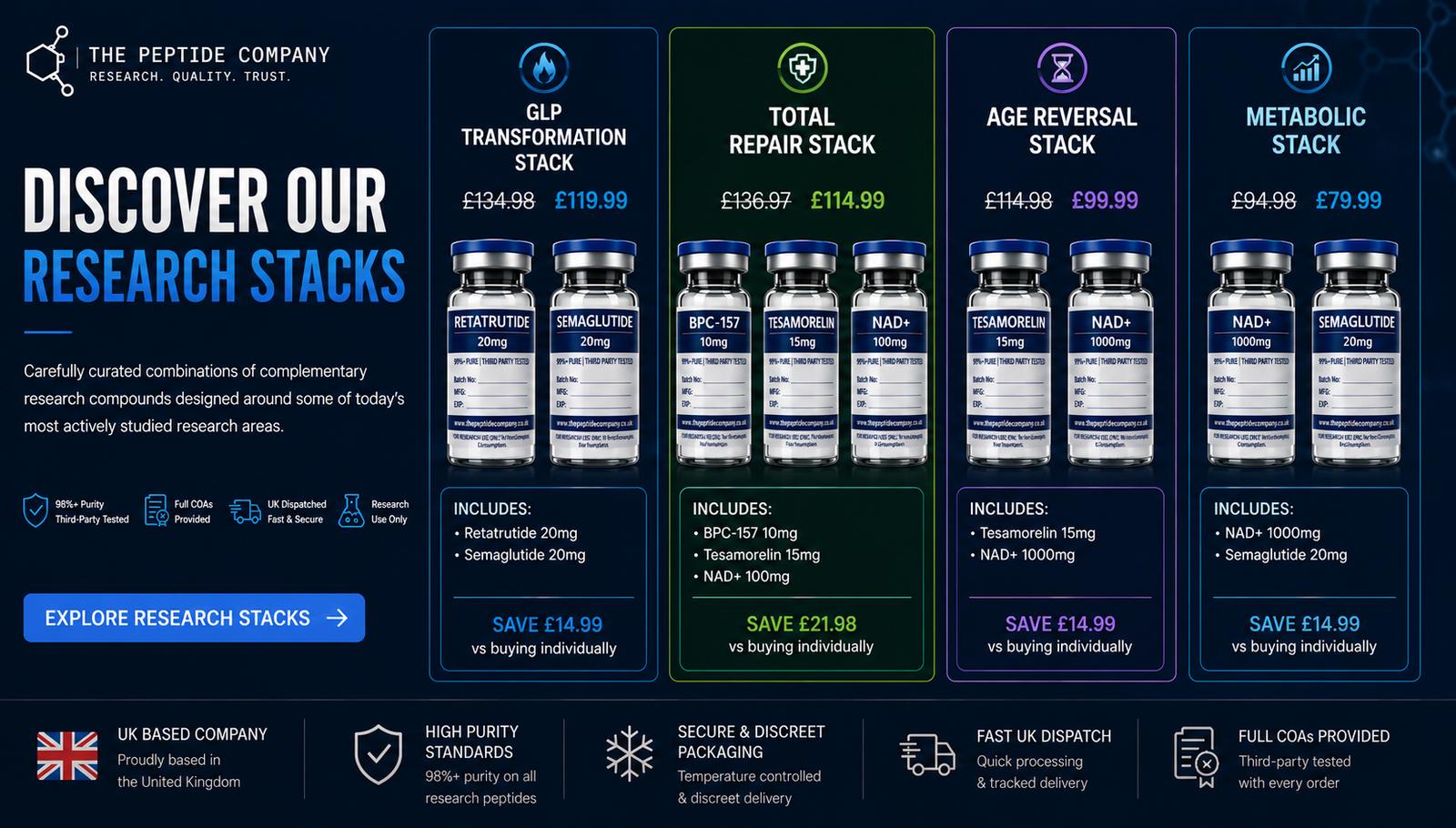
Research Stacks Designed Around Popular Areas of Study
Our research stacks bring together complementary compounds frequently explored within the same areas of laboratory research. Each bundle is designed to simplify purchasing while offering added value compared with buying products individually.
GLP Transformation Stack
Retatrutide and Semaglutide, selected for researchers exploring GLP-1 related pathways, metabolic signalling and energy balance mechanisms.
Total Repair Stack
BPC-157, Tesamorelin and NAD+ combined for recovery-focused, regenerative and tissue-related laboratory research.
Age Reversal Stack
Tesamorelin and NAD+ for longevity, healthy ageing, cellular function and energy production research areas.
Metabolic Stack
NAD+ and Semaglutide brought together for research into metabolism, cellular energy and metabolic regulation.
Explore Our Educational Research Guides
Learn more about the compounds included throughout our research stack collection.
Featured Products
Our most popular research peptides

Earn up to 24%
promoting
high-converting
products
Join The Peptide Company affiliate programme and partner with a trusted premium research brand designed for long-term growth, strong conversion, and high-value referrals.
Up to 24%
Commission
High earnings per referral
High-Converting
Products
Optimised pages that sell for you
Repeat
Orders
Customers come back = you earn more
Earn £30–£60 per sale on average
No cost · Instant access · Proven to convert · Paid for life
Want to see the products? View here →Research-Focused Quality and UK-Based Service
At The Peptide Company, we understand that researchers require consistent quality, reliable sourcing, and dependable service when selecting research compounds.
Trusted Research Peptide Supplier
Our mission is to provide carefully sourced research peptides and related compounds for laboratory and scientific research purposes, supported by clear product information and efficient UK delivery.
We focus on offering a growing range of research compounds including Retatrutide, Semaglutide, BPC-157, NAD+, Ipamorelin, Tesamorelin, GHK-Cu and specialist research stacks designed to simplify product selection for research projects.
Whether you are researching metabolic pathways, growth hormone secretagogues, tissue regeneration mechanisms, cellular signalling or longevity-related compounds, The Peptide Company aims to be a trusted source for your research requirements.
Fast UK Dispatch
Orders are processed quickly and shipped throughout the UK using trusted courier and postal services.
Research-Grade Products
Our product range is selected with quality, consistency and researcher requirements in mind.
Secure Checkout
Multiple secure payment options provide a smooth and reliable ordering experience.
Dedicated Customer Support
Our team is available to assist with product information, order enquiries and general customer support.
Growing Product Selection
We continually expand our catalogue to provide researchers with access to a wider range of peptide compounds.
Educational Resources
Our website contains research guides, educational articles and informational resources on peptide-related topics.
What Are Research Peptides?
Research peptides are short chains of amino acids that are studied for their interactions with biological systems. These compounds are frequently investigated in laboratory environments to better understand cellular communication, signalling pathways, tissue responses and various physiological processes.
Peptides occur naturally throughout the body and play an important role in many biological functions. Researchers study both naturally occurring and synthetic peptides to gain greater insight into how these molecules influence different systems and mechanisms.
As peptide research continues to evolve, interest has grown in compounds that are being explored in areas such as metabolic regulation, growth hormone signalling, recovery mechanisms, cellular health and healthy ageing research.
Read Our Peptide Research Guide →Research use only
All products supplied by The Peptide Company are intended strictly for laboratory research purposes only. They are not intended for human consumption, medical use or self-administration.
Metabolic Research
Compounds such as Retatrutide and Semaglutide have attracted attention within metabolic and weight management research due to their interaction with receptor pathways involved in appetite regulation and energy balance.
Growth Hormone Research
Researchers often investigate compounds such as Ipamorelin and Tesamorelin for their relationship with growth hormone signalling pathways and endocrine system responses.
Recovery and Regeneration Research
BPC-157 and other regenerative research peptides are frequently explored in studies involving tissue response, recovery mechanisms and cellular repair processes.
Reliable Delivery and Support for UK Research Customers
We aim to provide a straightforward ordering experience from checkout through to delivery, with fast UK dispatch, secure packaging and responsive customer support
Fast UK Dispatch & Delivery
Orders placed and paid for before 2pm Monday–Friday are typically processed the same day and dispatched via Royal Mail Tracked 24, helping ensure fast and reliable delivery throughout the United Kingdom. This is one of the strongest trust and conversion messages you can put on a peptide website because visitors want to know "When will it arrive?" immediately.
Secure Packaging
Products are packaged carefully to help protect product integrity during transit.
Order Tracking
Tracking information is provided where available so customers can monitor delivery progress.
Responsive Support
If you have questions about products, orders or delivery information, our customer support team is available to assist.
We believe that excellent service should accompany excellent products, which is why we continually focus on improving the customer experience throughout every stage of the ordering process.
Fast UK Dispatch
Orders are processed quickly and shipped throughout the UK.
Research-Grade Products
Selected with quality, consistency and researcher requirements in mind.
Secure Checkout
Multiple secure payment options for a smooth ordering experience.
Product Documentation
Clear product information and lab report access where available.
Supporting Consistency in Peptide Research
Proper storage and handling are important considerations when working with research compounds. Researchers should follow recommended storage guidance and avoid unnecessary exposure to heat, moisture, sunlight and repeated temperature changes.
The Importance of Quality in Peptide Research
Consistency is essential when conducting research. Factors such as storage conditions, handling procedures and sourcing standards can all influence research outcomes.
- Product quality
- Proper storage conditions
- Reliable sourcing
- Batch consistency
- Product documentation
- Research objectives
General Storage Guidelines
- Store products according to the storage information provided.
- Keep products in a cool, dry environment.
- Protect from direct sunlight.
- Avoid repeated temperature fluctuations.
- Ensure products remain securely sealed when not in use.
Research Best Practices
Maintaining organised storage systems and documenting handling procedures can help support consistency across research projects and minimise variables that may impact results.
Researchers should always review product information carefully before beginning any research activity.
Research Peptide FAQs
Helpful answers about research peptides, storage, delivery, product information and research use.
✓What are research peptides?
Research peptides are amino acid chains studied in laboratory environments to better understand biological and cellular processes. To learn more, visit our research guides including What Are Peptides?, Benefits of Peptides and Peptides in the UK.
✓How should research peptides be stored?
Storage requirements vary by product. Researchers should always review the guidance provided with each product and follow appropriate storage recommendations.
✓Do you ship throughout the UK?
Yes. We provide delivery services throughout the United Kingdom using tracked shipping services. Orders placed by 2pm on weekdays are eligible for next day delivery.
✓What payment methods do you accept?
Available payment methods are displayed during checkout and may change over time as additional payment solutions are introduced.
✓How quickly are orders dispatched?
Orders are typically processed and dispatched promptly, although delivery times may vary depending on location and courier services. Orders placed by 2pm on weekdays can be shipped for next day delivery.
✓What is NAD+?
NAD+ is a coenzyme involved in cellular energy production and is frequently studied in longevity and cellular health research. Learn more in our NAD+ Complete Research Guide.
✓What is Retatrutide?
Retatrutide is a research peptide that has attracted significant interest in metabolic and weight management research. Learn more in our Retatrutide Complete Guide.
✓What is BPC-157?
BPC-157 is a peptide commonly explored in studies involving recovery mechanisms and tissue-related research. Learn more in our BPC-157 Complete Guide.
✓What is GHK-Cu?
GHK-Cu is a copper-binding peptide that has become popular within regenerative and healthy ageing research. Learn more in our GHK-Cu Complete Guide.
What Our Research Customers Say
Trusted by researchers across the UK for high-quality peptide research materials.
John Noble
Was unsure what to buy so I rang these guys up, they guided me through everything and helped me understand what was best for me. Order arrived the next day in the UK. Great value, will definitely purchase again.
Russell Cain
Decent product, been using Retatrutide for 2 weeks and seeing a noticeable difference. Fast shipping and can pay with crypto.
Steve
Fantastic products, great packaging and quick delivery. Will be using again for future research orders.
Tim Mataciunaa
Excellent products, would highly recommend for anyone looking for research-grade peptides.